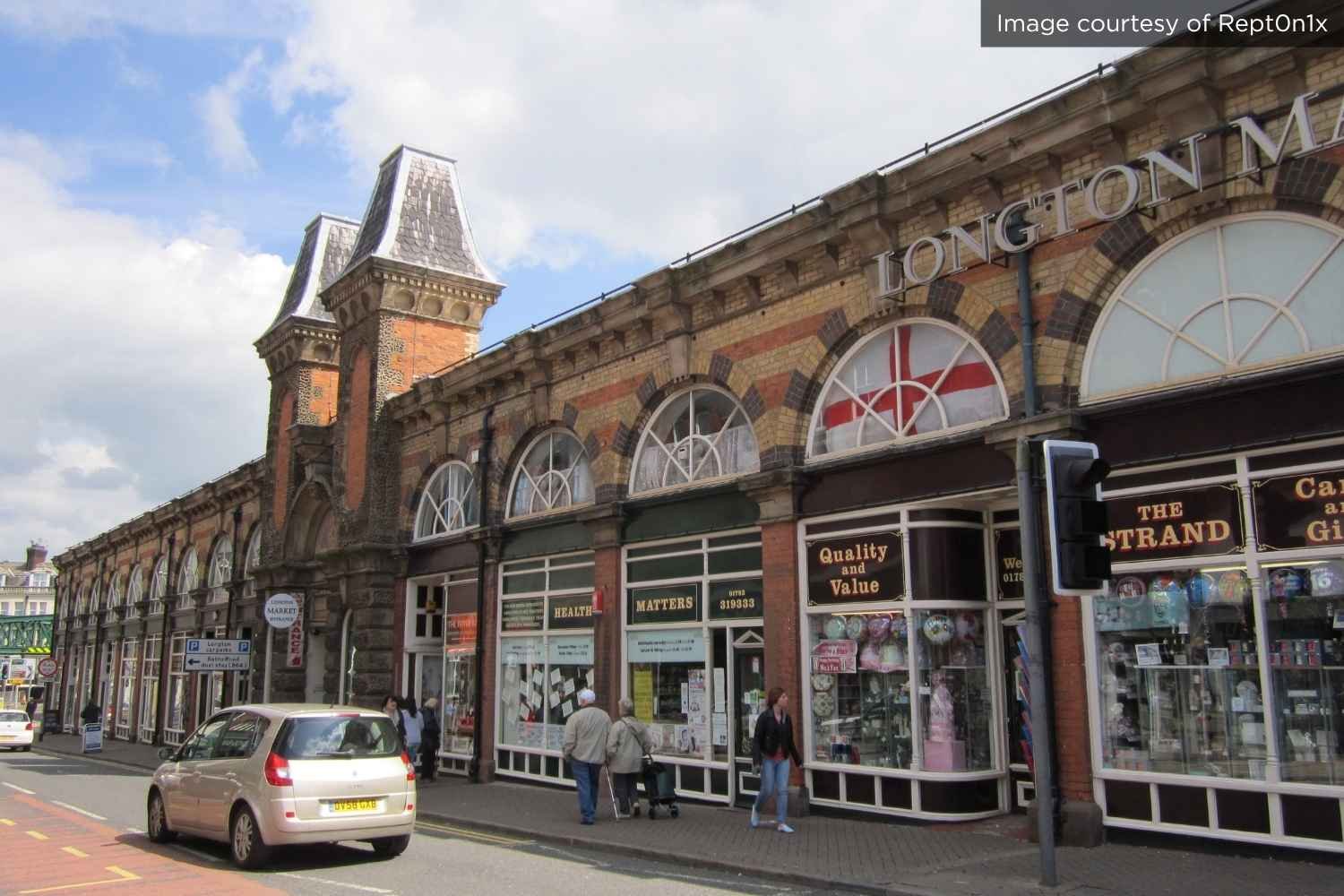
The Stoke-on-Trent town of Longton is a prime example of what it takes to find your tribe in the modern era, and inspire them to take action.
Have you ever heard of “hiraeth”?
It’s a Welsh word that describes a sense of homesickness, nostalgia or longing for a place, time or person that no longer exists, or to which one is unable to return.
Thought by many to be untranslatable, hiraeth has no single English-language equivalent. It is distinctly, categorically and unmistakably Welsh. Alas, I am not, despite my surname and a great-aunt named Myfanwy. But if I were, I suspect this concept would sum up my feelings for Longton in the 1990s.
My late grandparents, Pauline and Jim, epitomised Longton’s target audience at that time. Retired potbank workers who grew up in nearby Meir, they wanted an indoor market, reasonably priced shops and plenty of cafés. Pauline and Jim loved Longton. It’s where their tribe gathered, and they were as important to the community as it was to them.
Consequently, I spent a significant chunk of my childhood and early adolescence in Longton. But I wasn’t Longton’s target audience. If I’m being honest, I preferred Hanley when I was a kid. It drew a younger crowd, the shops were more exciting (sports goods and computer games), and indoor smoking seemed slightly less prevalent.
So why, when I reminisce, do I tend to think of Longton? Obviously, because I associate it with my grandparents, but I think there’s another reason
To me, Longton in the late 20th century remains the Platonic form of product-market fit.
Emotional connection
When I think of Longton, I think of chips and gravy in the upstairs café (officially named The Carlton House – who knew?).
I think of Fred on his market stall, ‘sneaking’ me a piece of cheddar from his knife.
I think of that strange electronics section at the back of Normid, where the appliances were proudly displayed on a raised platform for no discernible reason.
And, of course, I think of my Nan and Grand – constantly on the lookout for bargains and discarded pound coins, chatting endlessly with anyone and everyone who crossed their path, and bickering over where to have a drink and something to eat (as an aside, Jim favoured tea and toast in The Plaice to Eat following the upstairs café’s closure, whereas Pauline preferred to frequent Longton’s more salubrious establishments).
Now and again, we’d visit other places – usually Hanley town centre or Festival Park – if they needed something specific. But my grandparents’ attitude to Longton was less utilitarian. It was a gathering point, a community hub, a place to mingle without an appointment. Pauline and Jim didn’t need to go to Longton; they wanted to.
And that, in a nutshell, is effective marketing. It’s about cultivating your offering and positioning your brand so that they resonate with your target audience on both a rational and emotional level.
Doomstrolling
Both of my grandparents continued to visit Longton throughout their lives, but as the decades passed, it became difficult to shake the feeling that the town’s best days were behind it.
This was certainly the impression I got upon returning to the UK in 2019, having spent six years living and working in the UAE. I still enjoyed wandering around the market and visiting Café Continental* with my Nan, but it was difficult to ignore the proliferation of vacant shops and dilapidated buildings. Clearly, Longton had not escaped the broader decline in UK high streets, and the pandemic that followed only made matters worse.
Regrettable though this was, I simply accepted it as inevitable. Times change, places evolve and – sadly – people pass away. You can’t turn back the clock; that’s the nature of hiraeth.
Yet something brilliant has happened in recent years. A group of residents, businesses and community groups looked at Longton and drew an entirely different conclusion than I did. Far from accepting its decline as inevitable, they saw a viable future for the town.
And rarely have I been so happy to be proved wrong.
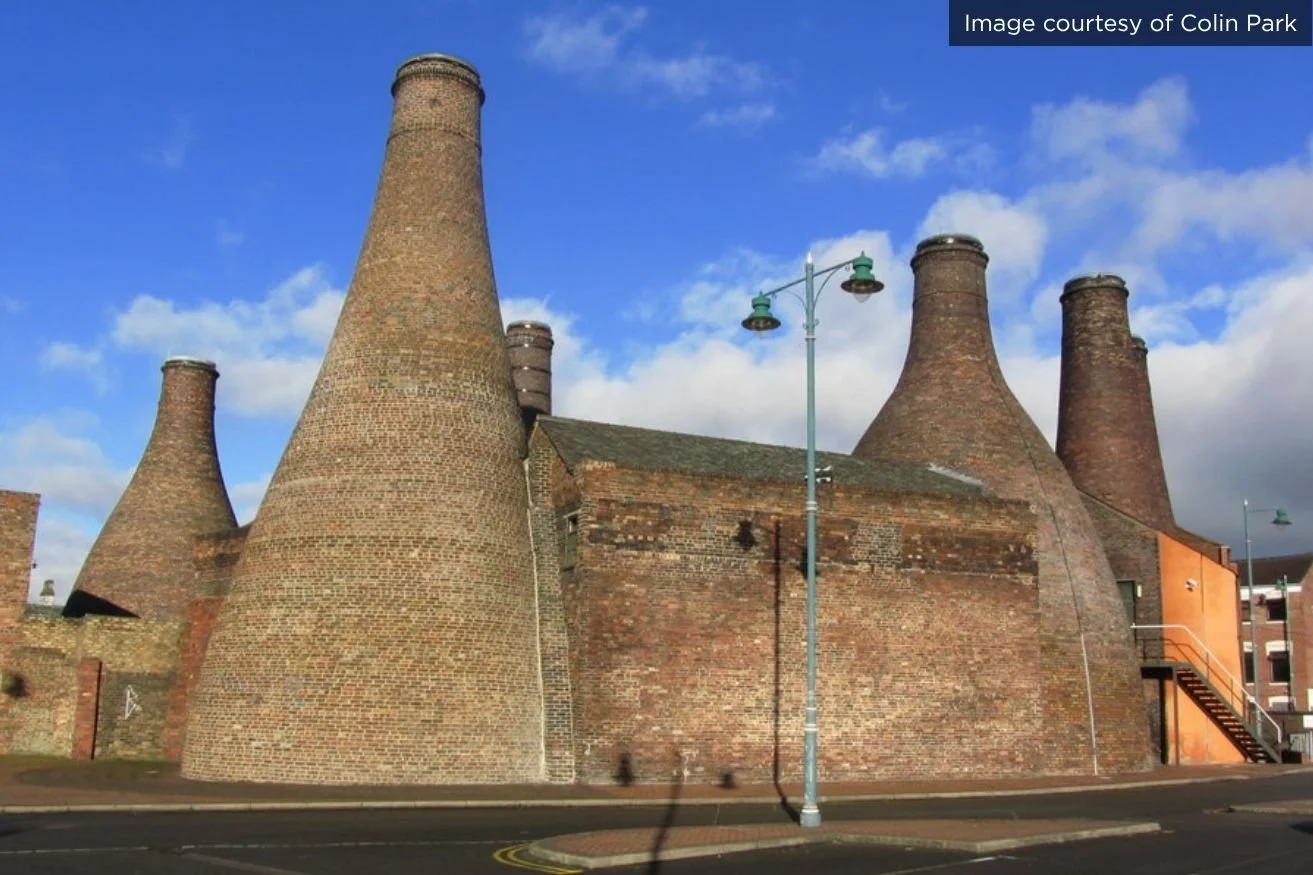
Channel 4’s The Great Pottery Throw Down is filmed at Gladstone Pottery Museum in Longton.
Recast and reinvigorated
Today, Longton’s shopping precinct is home to a growing collection of independent shops, eateries and community groups, not to mention a selection of vibrant rainbow-coloured buildings and ‘Buddy Benches’ designed to highlight and help combat loneliness.
Gladstone Pottery Museum, a regular destination for school trips throughout my childhood, has secured a spot in the national consciousness as the filming location for Channel 4’s The Great Pottery Throw Down – the ninth series of which aired earlier this year.
The town is also now home to a fully kitted-out enterprise centre courtesy of Launch It, a group of UK youth enterprise charities dedicated to supporting young entrepreneurs who want to start and grow their own businesses. Last year, Launch It Stoke-on-Trent – the organisation’s inaugural venture in the Midlands – unveiled the repurposed Longton Town Hall, replete with offices, open-plan co-working spaces, meeting rooms and more.
For its part, Chatty Duck Creative will be delivering a marketing and communications workshop as part of the charity’s two-day ‘Business Bootcamp’ tomorrow. Offering young founders from across Staffordshire the chance to pitch for grants of up to £1,000, this is the first time that Launch It Labs has run a start-up programme outside of London.
Capitalising on this forward momentum, Dr Allison Gardner MP announced Longton’s bid to become the UK Town of Culture in January. Initiated by Longton Exchange and led by Urban Wilderness CIC, the campaign aims to secure national recognition and £3 million of funding from the Department for Culture, Media and Sport (DCMS) to deliver a six-month cultural programme in 2028.
Like many others, I’m keeping my fingers crossed.
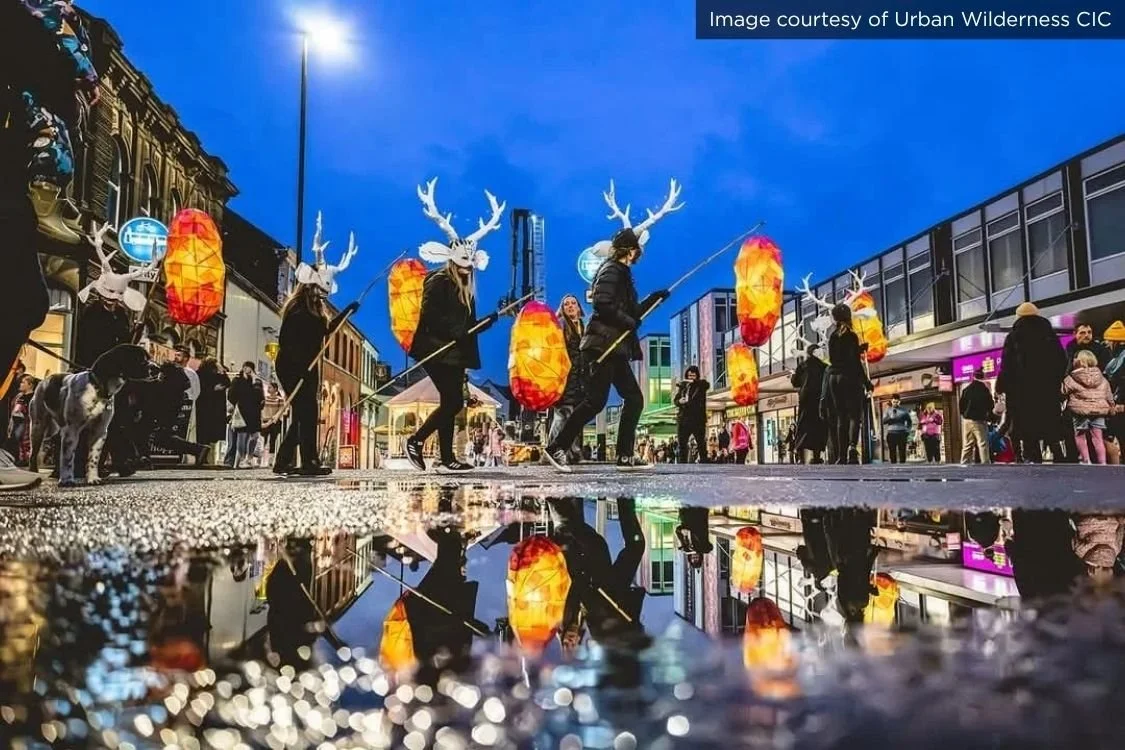
The fourth annual Longton Carnival and Pig Walk Parade, organised by Urban Wilderness CIC, will take place on Sunday 26 April 2026.
New tribe, new quest
So, what’s changed? Why is today’s Longton imbued with such hope and optimism?
First and foremost, it’s because of the enthusiasm, tenacity and hard work of the people and organisations I’ve just mentioned – the community leaders who looked at Longton and saw opportunity. But I would argue that this new lease of life has also been fuelled by the town’s willingness to identify and embrace a new target audience.
The miners and potters of Longton played a pivotal role in making Stoke-on-Trent a global ceramics powerhouse, but the town’s strengths do not lie in industrial brute force alone. Its bones are shot through with talent and creativity.
In the words of the Urban Wilderness team: “The coal under our feet burned at the pitch needed to fire bone china ceramics which changed transport, trade routes, working practices and tea making the world over. Made everyone from miners to flower-makers, seamstresses, designers, gold-leaf hand-painters, transfer makers and packaging designers, we are a town of small-scale innovators who have changed the world. And we’re still here, doing it.”
To me, this reads like a rallying cry for Longton’s new tribe: young creatives, innovators and entrepreneurs who want to take the town’s rich heritage, reimagine it, and shape it into something new and exciting – a place in which they can thrive.
The chances are I’ll always have hiraeth-esque feelings for the Longton of my childhood. However, I no longer feel sad about its passing, because that part of the town’s history – the place and the people – left an indelible mark. They helped shape what’s to come.
Today, I’m more interested in Longton’s future and the people moulding it. Ultimately, I’ve no idea whether they’ll succeed, but I do know one thing – I was dead wrong about decline being inevitable.
For the first time in a long time, Longton’s future is looking pretty bright.
And I reckon Pauline and Jim would approve.
* Jim passed away in December 2017, thus losing his voting privileges. Pauline joined him in the uppermost upstairs café in January 2024. Both are dearly missed.
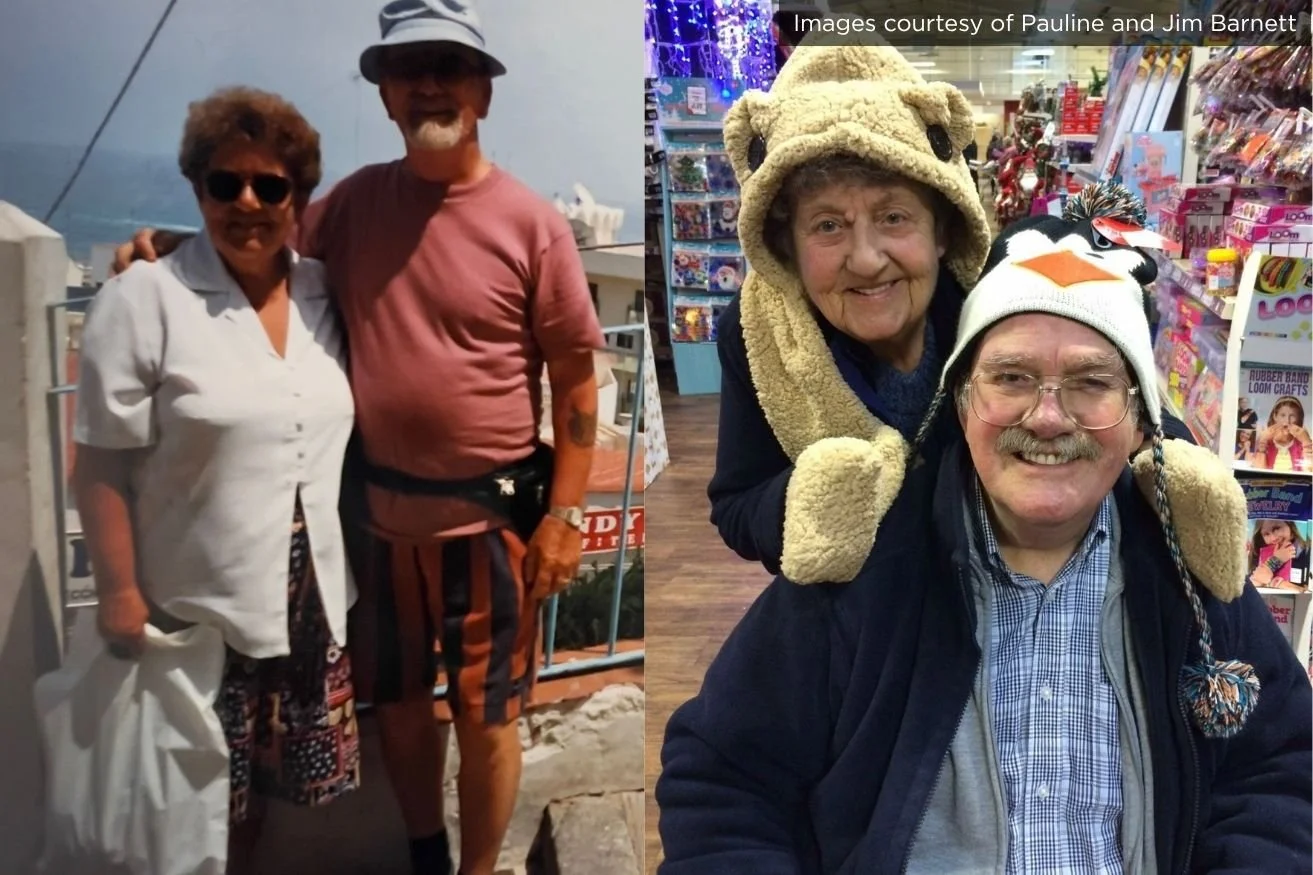
Pauline and Jim enjoying some summer sun (left) and the diverse array of novelty hats available at The Range (right).
To learn how Chatty Duck Creative can help your organisation identify and connect with its target audiences, book a discovery call.